
Managing heat in AI data centers is a growing challenge. As hyperscalers cram more and more high power computing systems into huge facilities, they generate more and more heat. Data center designs are switching from fan-based systems to liquid ones, which pipe water near electronics to gather up waste heat. That hot water is then cooled, dissipating the heat into the environment.
Michael Abdelmaseh has a different idea: what if some of that waste heat could be utilized and converted back into usable electricity? The thermoelectric effect, by which certain materials can convert thermal energy into electrical energy and vice versa, has been known for about 200 years. The company Phononic is using thermoelectrics to cool data centers using electricity.
Reversing that process, thermoelectric generators harvest heat to produce electricity, but they currently aren’t very durable or versatile. Abdelmaseh, founder and head engineer of PyroDelta Energy, wants to make thermoelectric generators that can easily be integrated with data center liquid cooling systems, in engines, and in drones. This will not replace traditional cooling methods, since thermoelectric materials are currently limited in efficiency, but it could introduce some heat re-use. PyroDelta is a subsidiary of Vancouver-based First Tellurium.
The main thermoelectric material in commercial use today is bismuth telluride. The material is grown in large crystals—which is necessary because the quality of the crystal contributes to its ultimate thermoelectric performance—and then sawed into smaller pieces that can be soldered together to make devices. Slicing and dicing the crystals generates waste material, which increases costs. And bismuth telluride cylinders can only be hewn into a limited number of shapes, typically tiny cubes, says Abdelmaseh. The crystals themselves are also prone to cracking. Another drawback is the assembly of the devices themselves. They are typically soldered together, and melt when exposed to very high temperatures.
Abdelmaseh, previously an engineer at Toyota, wanted to make a more versatile thermoelectric generator. He developed a way to grow bismuth telluride crystals into a variety of shapes. This eliminates process steps and materials waste, he says. Instead of growing large crystals, PyroDelta relies on the capillary effect to draw the raw materials into molds during crystallization.
“Based on the cavity where the crystal grows, you can decide the final size and shape of the crystal,” he says. Using these methods, it’s possible to make curved shapes, not just cubes. These curved designs can be made in the shape of rings to create a tube-shaped thermoelectric generator that goes around a water pipe in a cooling system, for instance. And the materials are less brittle than those made by sawing, which improves durability.
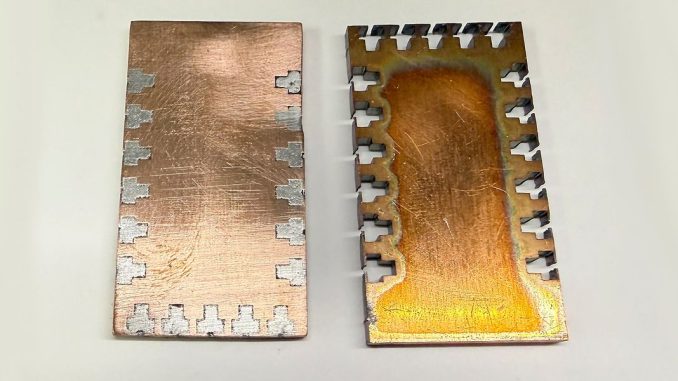
Thermoelectric generators that can convert some of the waste heat in data centers back into electricity. Michael Abdelmaseh
Abdelmaseh says this capillary casting method leads to a 60-80% reduction in materials waste, and approximately 10 times longer durability.
The company has developed a prototype energy harvester for data centers. While the electricity generated with the prototype is not nearly enough to run an AI data center, Abdelmaseh says it should be sufficient to power temperature sensors, security cameras, and other sensors within data centers. The company has also developed a prototype thermoelectric car radiator that gathers heat to produce energy to run the electrical systems in gas-powered cars. Abdelmaseh says this could improve the efficiency of internal combustion engines by 5%.
The company is also competing in the DARPA Lift Challenge this summer. Competitors are tasked with demonstrating a drone that can lift loads twice or more time greater than its own weight. Abdelmaseh says a thermoelectric system helps make their drone more powerful at a lighter weight by scavenging thermal energy.
From Your Site Articles
Related Articles Around the Web



