Cities in Texas, North Carolina, Kentucky, and New Jersey have pursued bans or moratoriums on data centers.
Power plants serving data centers in seven states withdraw about 3.4 trillion gallons of freshwater annually.
At least 75 proposed projects worth about $130 billion faced local opposition in early 2026.
Cities across the U.S. are restricting AI data center development as communities raise concerns about water supplies, electricity costs, and land use.
Austin, Texas, became the latest city to act Thursday, when its City Council voted unanimously to begin drafting rules that could restrict or exclude new data centers.
Myriad: How many days will Claude go down? Click to make your prediction.
The vote followed a Ceres study examining water withdrawn by power plants serving data centers in Virginia, Texas, California, Illinois, Georgia, Ohio, and Arizona. The seven states host about half of the nation’s data centers.
Those plants withdraw about 3.4 trillion gallons of freshwater annually, equal to 10.4 million acre-feet. That exceeds California’s average annual urban water demand of 8 million acre-feet and is about 12 times the combined annual water use of Los Angeles, Phoenix, and Washington, D.C., according to the study.
“Overall, we saw that 66% of the power plants that use water in those states were exposed to medium to high water stress,” Kristen James, senior program director for water at Ceres, said in a statement.
The study counts water that power plants draw from rivers, reservoirs, and other sources to generate electricity for data centers. Some is returned, while water consumed through evaporation or other processes is not immediately available for reuse.
Austin officials will now draft Land Development Code changes defining data centers and establishing safeguards. Council members are expected to consider the first phase of the ordinance in December.
The nonprofit consumer advocacy group Public Citizen said the vote contrasted with what it described as inadequate action from Texas state leaders.
“While Gov. Greg Abbott can only offer performative and mostly voluntary measures, local leaders are acting to protect the community from large-scale data centers,” Kaiba White, an Austin-based climate policy specialist for Public Citizen, said in a statement.
Austin follows a number of other American cities that have taken measures to prevent data centers used for AI computing and other technologies from being built within their borders.
In June, San Marcos, Texas, barred data centers under its zoning laws, while Durham, North Carolina, and Cave City, Kentucky, imposed moratoriums. Earlier this month, Jersey City, New Jersey, banned data centers as the primary use of industrial property. This rise in opposition to AI data centers has also led to arrests, with at least 37 Americans detained during AI data center protests in 2026 so far.
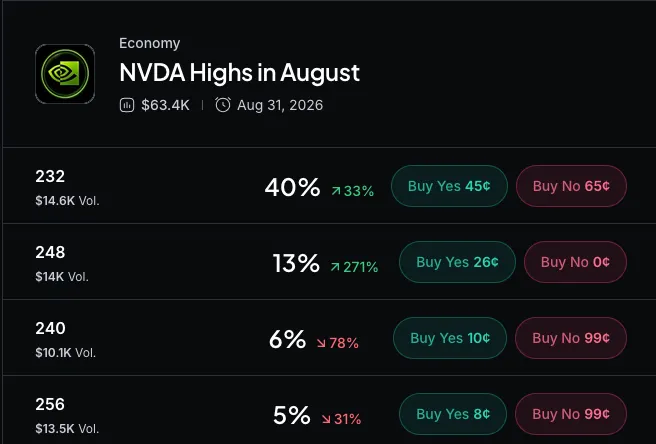
Myriad: How high will Nvidia go? Click to make your prediction.
The push has also expanded beyond local ordinances and has reached state legislatures.
In April, Maine lawmakers approved what would have been the country’s first statewide moratorium on large data centers. Gov. Janet Mills later vetoed the bill because it did not exempt a proposed project in Jay, though she subsequently created an advisory council to study data center policy. Earlier this month, Pennsylvania imposed new requirements for large data centers, including annual water and energy reporting.
The pushback against AI data centers has also taken to the streets. In March, roughly 200 protesters marched outside the San Francisco offices of OpenAI, Anthropic, and xAI, demanding a pause in the development of more powerful AI systems.
Daily Debrief Newsletter
Start every day with the top news stories right now, plus original features, a podcast, videos and more.