
Over the last 21 months, the U.S. federal government has created a series of high-profile barriers to legal immigration by highly-skilled students and workers: Cancelling visa extensions, cutting interview opportunities, and attempting to charge US $100,000 or more for certain immigrant visas.
“Whether they go into effect or not, it’s really an unrelenting barrage of government-sponsored propaganda against highly-skilled workers in the U.S.,” says former congressional immigration policy advisor David Bier, now an immigration scholar at the Cato Institute, a libertarian think tank.
The effect is that U.S. tech companies are adapting their search for top talent in part by both building offices and hiring workers abroad to get around the onslaught of new rules. And they’re doing so without wanting to talk about it: IEEE Spectrum contacted 25 U.S. tech companies to learn how they were adapting to the shifting environment. All of them either did not respond to a request to comment or declined to participate in this story.
New H-1B Rules Create Uncertainty, Impose Costs
By July 2025, the new U.S. presidential administration tightened visa interview requirements and imposed social media checks on new visa holders, and international students were already showing less interest in studying in the U.S., which IEEE Spectrum reported at the time.
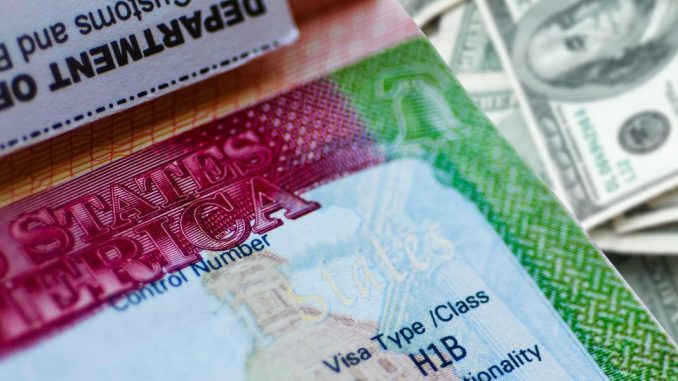
Then, in September 2025, U.S. President Donald Trump proclaimed a $100,000 tax on applications for new H-1B visas, up from around $5,000. H-1B visas allow certain skilled workers to temporarily live and work in the U.S. and serve as a common bridge to permanent residency. One category, for workers at universities, hospitals, and other non-profit institutions, is uncapped, but for-profit companies together can only hire up to 85,000 H-1B workers a year across the U.S., assigned through an annual lottery.
Tech giants including Apple, Google, Microsoft, and Walmart advised some of their visa-holding employees not to travel abroad for fear of having trouble re-entering the country. They also lobbied the federal government, which narrowed the proclamation to applications from outside the U.S. Most applications for H-1B visas are by companies trying to hire foreign workers already in the U.S. with a different legal status.
In fact, most companies that might have hired H-1B workers decided against applying for visas for candidates subject to the $100,000 tax, a March court filing revealed. DHS recorded collecting fees for only 85 qualifying H-1B applications between the presidential proclamation in September 2025 and 15 February 2026. The department also reported processing 87 percent fewer applications for the H-1B visas subject to the tax than the year before. The government ended up earning $20 million less than the previous year on H-1Bs, because so few companies were willing to pay the new price for hiring H-1B workers from abroad.
“Some of those jobs might just be relocated abroad or maybe companies will make more efforts to recruit U.S. workers,” says sociologist Julia Gelatt, an immigration demography scholar at the Migration Policy Institute in Washington, D.C. “Some immigrant workers may have found a different pathway, like the L visa for transfers inside multinational companies or the highly-skilled may have been able to get O visas for extraordinary ability.”
“Whether they go into effect or not, it’s really an unrelenting barrage of government-sponsored propaganda against highly-skilled workers in the U.S.” —David Bier, Cato Institute
The U.S. government also continued targeting foreign students. In July, it set a fixed 4-year time limit on student visas. In the past, those visas lasted as long as the student’s course of study. The federal government is also studying a proposal to charge students on such visas between $70,000 and $100,000 to stay for 1 to 3 years after graduation—something that they can currently do for free. “If there is a $100,000 fee for that, it’s going to cut the talent pipeline,” Gelatt says.
A non-peer-reviewed discussion paper by economist Michael Clemens of Johns Hopkins University in Baltimore estimates that the proposal to put time limits on student visas could cost U.S. universities between hundreds of millions and several billion dollars a year. That’s without getting into the longer-term cost to the wider economy: Many foreign students who remain in the U.S. eventually apply for H-1B visas. “For many talented individuals the H-1B is the only way to stay after studying here and eventually getting a green card,” Gelatt says.
For a few weeks earlier this year, things were looking better for H-1B applicants: In July, the U.S. Court of Appeals for the First Circuit (covering Maine, Massachusetts, New Hampshire, Puerto Rico, and Rhode Island) upheld a lower court ruling that the September 2025 H-1B tax was illegal, removing that particular barrier. But a few weeks later, on 25 August, the administration responded with a proposed rule that the Department of Homeland Security (DHS) charge $103,265 for the 85,000 H-1B visas it issues annually to for-profit companies. If it goes into effect, the rule would apply to a far larger number of people than the overturned 2025 proclamation, because even applicants already in the country would need to pay.
“This is a pivot to find another way to enact a policy that was ruled illegal in federal court,” says Clemens.
The proposed rule is open for public comments through 24 September, and DHS must address those comments before issuing a final rule. Plenty of commenters welcome any barrier to the H-1B program, which they blame for taking jobs from U.S. workers, despite a consensus among economists that foreign skilled workers in the U.S. enable their American colleagues to patent more and earn more.
Other commenters point out flaws in the rule’s legality. As one commenter puts it: “It exceeds DHS’s statutory authority, functions as an unlegislated tax that bypasses Congress, rests on an unsupported revenue projection, and will drive high-skilled talent out of the United States.”
Companies Seek H-1B Workarounds
While few U.S. tech companies have issued public pronouncements on U.S. immigration policy, their staff are talking about it at a pragmatic level: for instance, the Society for Human Resource Management organized a webinar on navigating H-1B policy soon after the 2025 presidential proclamation. The society recommended employers plan for longer hiring timelines, especially from countries such as China, India, and the Philippines, from which many immigrants are hired. It also notes that companies may want to focus on retention of existing talent by helping them switch from temporary visas to permanent residency.
Changes to immigration policy are also reshaping the flow of future workers. As of March, U.S. universities were reporting 20 percent fewer international enrollments in bachelor’s programs than the year before, according to Studyportals, an international student placement advisory. It was worse for master’s degrees: a 24 percent annual decline. 84 percent of the participating universities listed government policy as a significant obstacle to enrollment.
Many U.S. tech companies currently hire foreign students to work summer internships or part-time while still on their student visas, or in the immediate years after they graduate. Experts say the existing program is good for both workers and companies. “Companies don’t want to have to learn how to recruit their talent from abroad, they want to hire the young smart worker who’s right in front of them,” Gelatt says.
Companies also do not appear eager to provoke the federal authorities on whom they depend for visas. Of the 25 U.S. companies IEEE Spectrum contacted, 20 are among the top 100 users of H-1B visas for comment. Only two replied. They both declined to participate in this story.
In unpublished, preliminary research, Clemens says, he and other economists have found clues in online job sites that fewer high-skill Indian tech workers are moving to the U.S. than in the past. “People around the world have very clearly gotten the message,” Clemens says.
From Your Site Articles
Related Articles Around the Web



Be the first to comment