
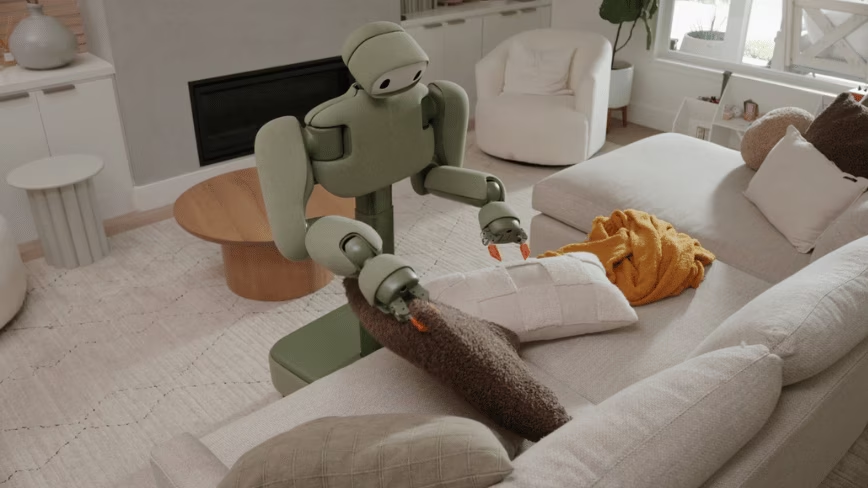
The robot butler has been five years away for about twenty years. Weave Robotics thinks the trick is to aim lower. Its new home robot, Isaac 1, does not walk, has no fingers, and mostly just wants to do your laundry. It also costs a fraction of its humanoid rivals.
The Y Combinator-backed startup unveiled Isaac 1 on Wednesday. The launch post has passed 13 million views. At $7,999 up front, or $449 a month, it undercuts the field by a wide margin.
A Roomba with arms
Isaac 1 is deliberately un-humanoid. It rolls on a wheeled base rather than legs, and rises from a crouch to 5ft 9in when there is work to do. It grips with two orange claws, not fingers. The soft body comes in muted colours with names like Sage and Terracotta, and it runs for about eight hours per charge, according to TechRadar.
The job list is narrow on purpose. It finds and picks up dirty clothes, folds and puts away the clean ones, makes the bed, fluffs the pillows, and tidies away shoes and toys. Notably, it does not load or run the washing machine. It works through a phone app, mostly on its own. Weave admits a human operator can take over remotely for tricky tasks.
Cheaper than the competition
TNW City Coworking space – Where your best work happens
A workspace designed for growth, collaboration, and endless networking opportunities in the heart of tech.
The price is the headline. 1X’s Neo costs around $20,000. Tesla’s Optimus has no price at all yet. Bipedal rivals such as Figure and Unitree run from $12,000 to well over $20,000, because legs need pricey actuators and sensors. Weave’s wheels-and-claws approach sidesteps most of that cost.
The bet fits a wider argument in robotics: that purpose-built machines will beat general-purpose humanoids into the home. It is the same logic drawing billions into physical AI on both sides of the Atlantic.
The reaction online split neatly, as Business Insider noted. “Closer and closer to never doing chores again,” wrote Chris Paxton, an AI lead at Agility Robotics. The investor Jason Calacanis said it was “about to get very strange.” Others were blunter. Fintech executive Simon Taylor called it a “Roomba with arms.” One commenter simply called it “slow” and “clunky.”
The catches
There are several. Deliveries start in September, but only in California. The rest of the US waits until 2027, and Europe is not on the map at all yet. The autonomy is partial, propped up by teleoperation. There is a quieter concern too. Weave’s site says it uses personal information to improve its services, but the company would not say whether footage from inside people’s homes trains the robot. That is the unease that shadows every home robot with a camera and a data pipeline.
None of this makes Isaac 1 the machine that finally cracks the home. The promised army of domestic robots keeps slipping into next year. But by doing less, for less, Weave may have built something people will actually buy. Sometimes the winning robot is not the one that looks most like us.



