
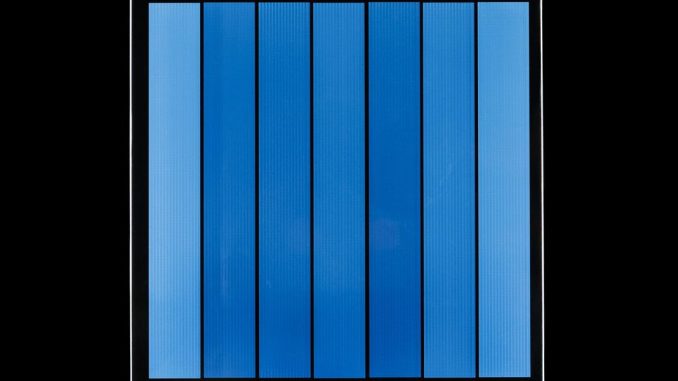
Huge amounts of data could be archived in a compact format for millennia, by using lasers to encode that data into glass.
In 2028, the amount of data that the world is projected to generate—in the form of photos, videos, emails, documents and other files—could reach about 394 zettabytes (394 trillion gigabytes), according to the market analyst firm International Data Corporation. That’s a nearly threefold increase from 2023.This demand has driven research toward radically new ways of storing data, in part because all mainstream electronic data storage techniques break down over time. For example, most digital archives are currently saved on magnetic tape, which only lasts about 30 years.
One possibility that scientists have explored is storing data in glass because of its resistance to moisture, temperature fluctuations and electromagnetic interference. However, previous attempts exploring this strategy faced problems with data density, writing throughput, and energy efficiency.
In a study, Microsoft scientists sought to overcome those deficiencies by using femtosecond lasers, which fire high-power laser pulses just quadrillionths of a second long. The researchers focused a laser beam on a point within glass to modify its optical properties and encode data as voxels, the 3D equivalent of pixels. The researchers published their findings online on 18 February in Nature.
Advanced Glass Data Storage Technology
Each voxel the scientists encoded was about 0.5 micrometers large in each direction and separated from each other by about 6 micrometers. They could then read out the data using an automated microscope. Machine learning models used during reading help account for the effects of random errors and optical interference between voxels.
The new archival system, called Silica, can store up to 1.59 gigabits per cubic millimeter. This amounts to 4.84 terabytes stored in roughly 300 layers within a 12-square-centimeter, 2-millimeter-deep glass chip, the equivalent of about 2 million printed books or 5,000 ultra-high-definition 4K films.
Femtosecond laser pulses can write data into glass in the form of tiny 3D voxels.Microsoft Research
One drawback of previous attempts at glass data storage was how they often relied on multiple laser pulses to write each voxel. This led to reduced throughput and high power demands. To overcome this challenge, the scientists developed two different types of voxels, called phase voxels and birefringent voxels, which each only required a single laser pulse to write.
“This significantly reduces the power required from the laser to store data, and it does not require the laser focus to alternate between staying in the same place to deliver multiple pulses and movement to the next location,” says Richard Black, the research director for Microsoft’s Project Silica. “Consequently, the laser focus can be swept rapidly across the glass, enabling writing speed only limited by the speed of the femtosecond laser itself.” All in all, by firing millions of laser pulses per second, Silica could write up to 25.6 megabits per second with a single beam.
Both of these kinds of voxels modify the speed at which light travels through the glass, which is based off a factor called the refractive index. A phase voxel alters the refractive index uniformly in all directions, whereas a birefringent voxel changes the refractive index in a direction-dependent manner.
With birefringent voxels, the scientists could achieve significantly better data density, write throughput, and energy efficiency. However, these voxels required high-purity silica glasses. In comparison, phase voxels can potentially be written in any durable transparent material, such as borosilicate glass, which is widely available in cookware. Phase voxels also require simpler writing and reading hardware.
To assess the long-term stability of Silica, the scientists repeatedly heated inscribed glass plates up to 500 °C, simulating the long-term aging of the glass at lower temperatures. Their results suggest the data on the plates might be readable for more than 10,000 years at 290 °C, and likely even longer at ambient temperature, an endurance far exceeding conventional electronic data storage techniques.
 An automated microscope can read out the voxels carved into glass to recover the stored data.Microsoft research
“This is not a replacement for everyday storage like [solid state drives] or hard drives,” Black says. “It’s designed for data you want to write once and preserve for a very long time.”
The clearest applications “are archival—anywhere data must survive for centuries such as national libraries, scientific data, or cultural records,” Black says. “It’s also compelling for cloud archives, where data is written once and kept indefinitely.”
A common misconception about glass is that it flows over a few centuries. Black notes that “at room temperature, glass is effectively a solid and does not flow on any meaningful timescale.” At normal storage conditions, “the glass and the data structures within it are essentially unchanged for far longer than human history.”
Black cautions there remain questions about how feasible this strategy can prove at scale, as femtosecond lasers are currently expensive. The researchers hope that by sharing their results, other groups can build on their work to help make the technology accessible.
From Your Site Articles
Related Articles Around the Web



